French, early 20th century
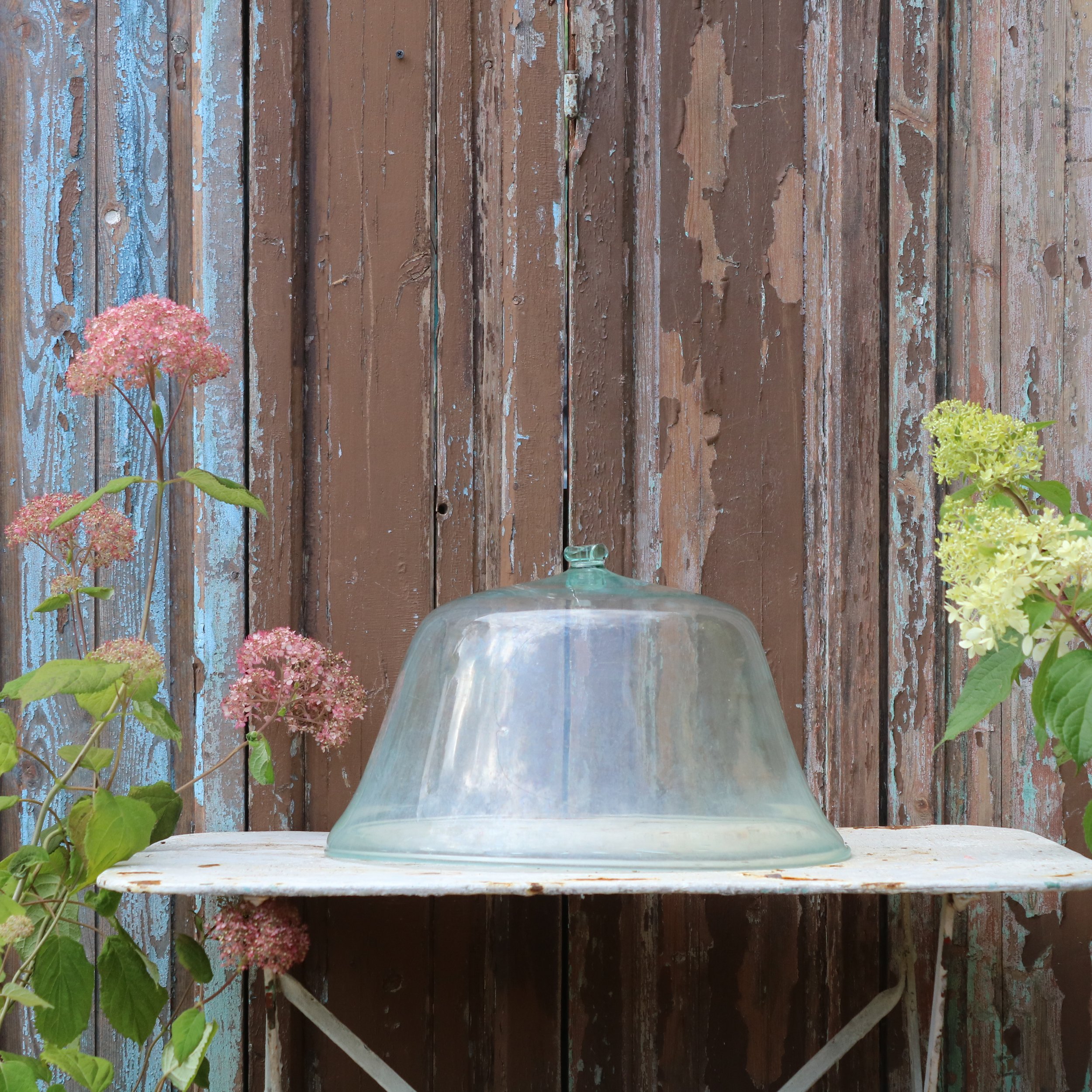
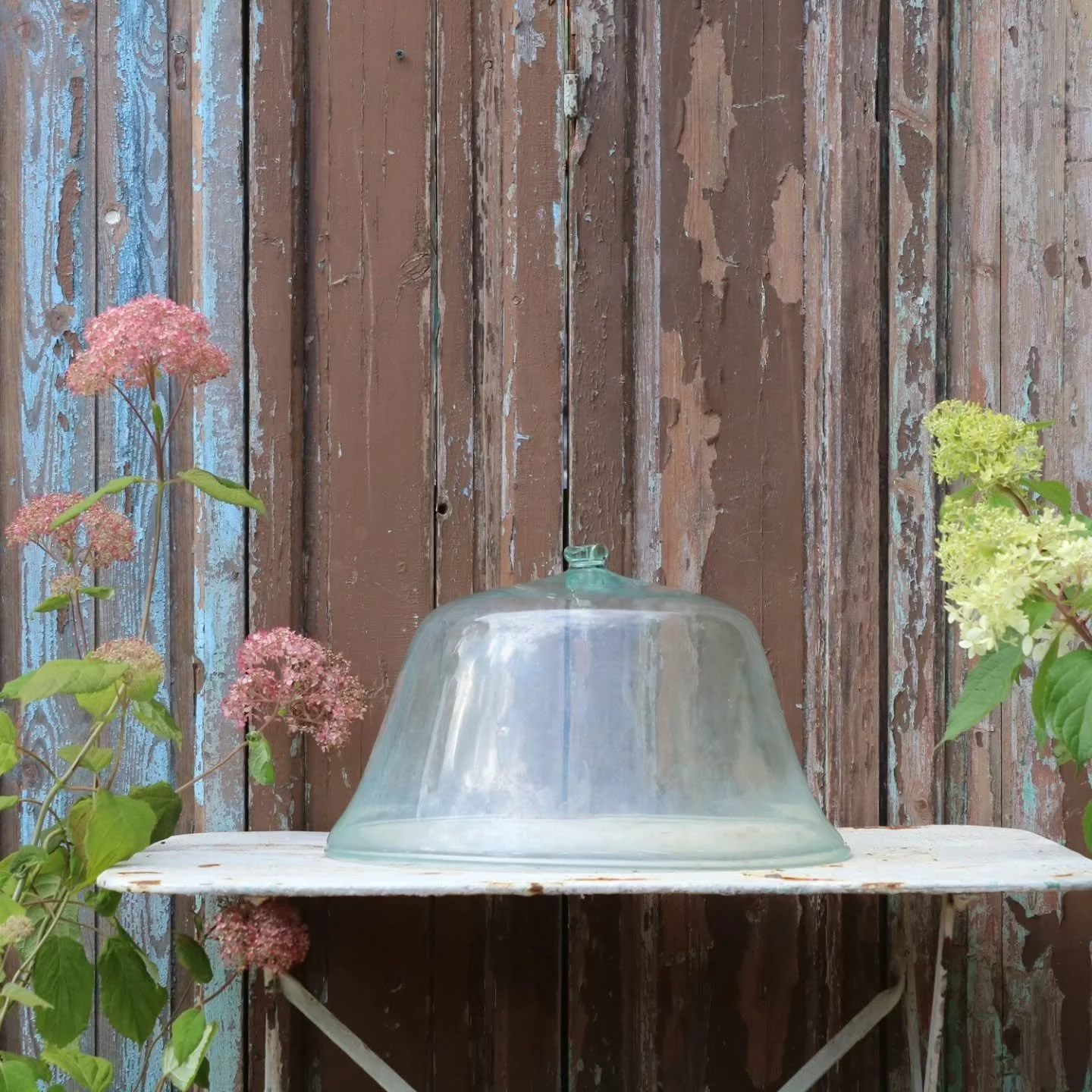
A working garden cloche from rural France, early 1900s. The kind of object that spent a century doing quiet, useful work — protecting seedlings through cold springs, sitting forgotten in an outhouse, accumulating the particular patina that only time and honest use can produce.
The glass is hand-blown, with the gentle irregularities and faint aqua tint that machine production never quite replicates. The hand-formed glass knob is a considered detail on an otherwise purely functional object — a small gesture of craft on something made to work hard outdoors.
Provenance & History
French, early 20th century. Glass cloches of this type were used throughout kitchen gardens and potagers across rural France, placed over tender seedlings and young plants to extend the growing season. Hand-blown in greenish aqua glass, they were made in significant numbers but few have survived intact.
Design Notes
Hand-blown glass with natural aqua tint. Gently irregular form consistent with hand production. Hand-formed glass knob handle. Broad, stable base. The slight variations in the glass — bubbles, pulls, uneven thickness — are the mark of the hand, not flaws.
Condition
Good throughout. Minor surface marks and weathering consistent with age and outdoor use — these add to rather than detract from the character of the piece. No cracks or chips to the glass.
Dimensions
W 44cm × H 26cm
Styling Inspiration
On a worn stone surface alongside terracotta pots, or placed over early growth in a kitchen garden border. Against limewashed render or beside an old brick wall. Equally at home brought indoors — on a windowsill, over a plant, or simply as a sculptural object in its own right.
A functional French garden antique with the quiet presence of something genuinely old — collected with purpose, and ready to live with again.
Shipping & Delivery
UK shipping is calculated per item and area and is accurate for single item purchases. If you are buying multiple pieces and the combined shipping appears unusual, please get in touch and we will happily review.
Professionally packed. Worldwide shipping available on request.
French Basque, early to mid 20th century
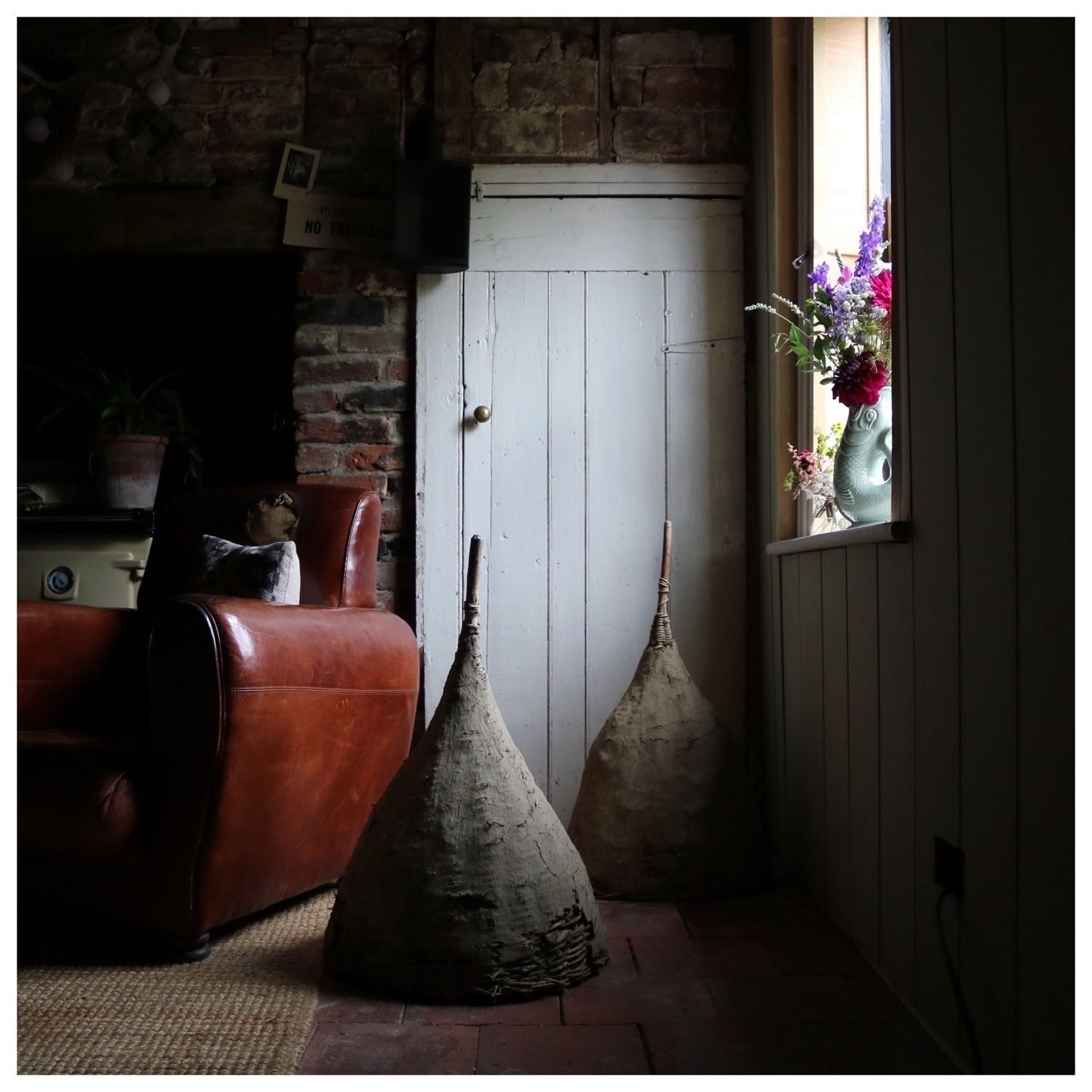
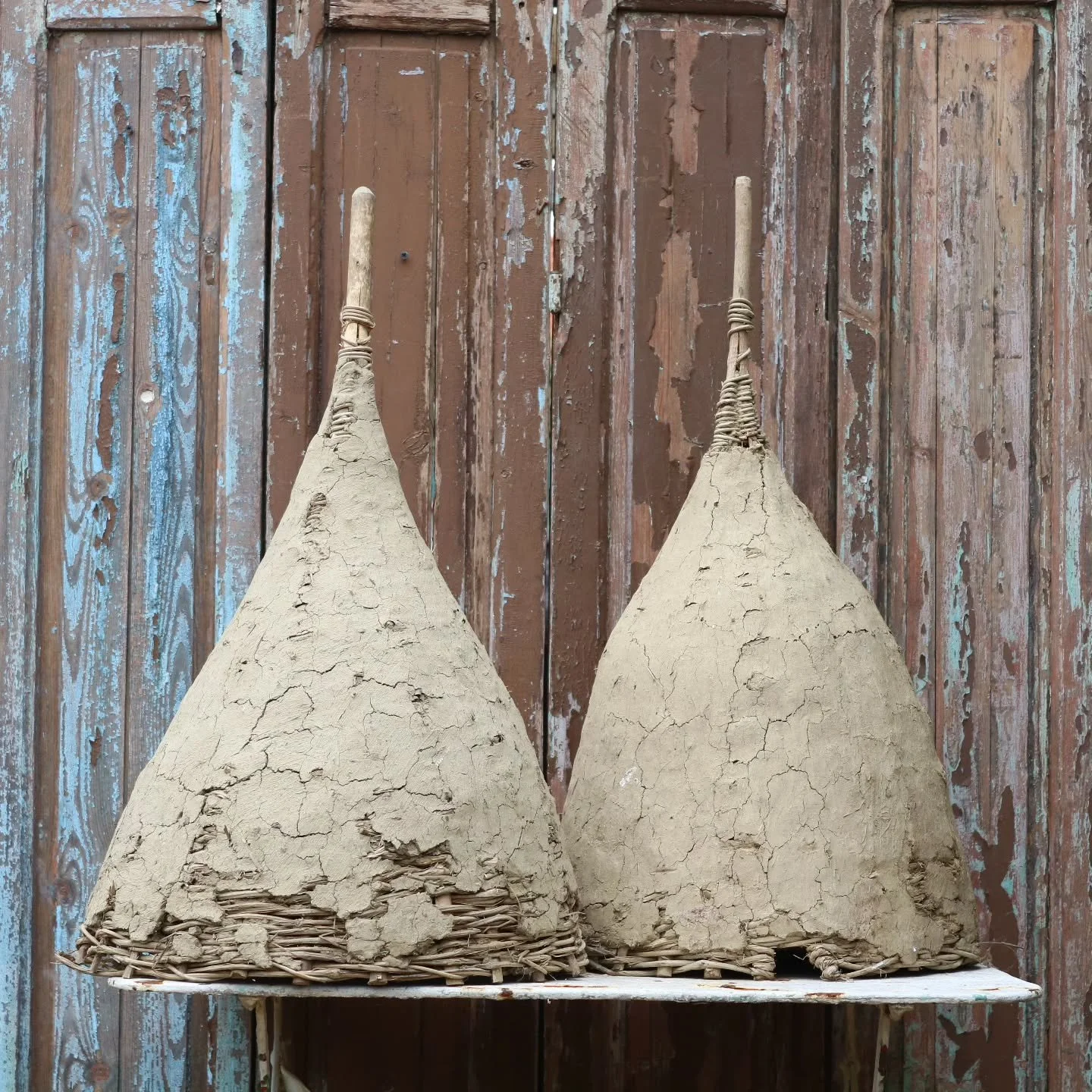
Made by hand in the French Basque region, these primitive beehive skeps are among the most honest objects you will ever bring into a home. Woven from wicker and sealed with a traditional clay daub — a technique unchanged since medieval beekeeping — each one is entirely unique, shaped by the hands that made it and the years it has lived. No two were ever meant to be identical.
There is something quietly compelling about their presence. The surface is extraordinary — crazed, cracked, and deeply weathered, every mark a record of original purpose. The wicker construction beneath tells its own story: look inside and you find a tunnel of hand-woven withies packed with clay, that once housed a working colony in the farmyards and orchards of southwest France. This is not distress applied for effect. This is time.
Provenance & History
French Basque region, early to mid 20th century. Daub-covered wicker skeps were the working beehive of rural France for centuries — each one hand-formed by the beekeeper or a local craftsman, sealed with a mixture of clay and earth to waterproof and insulate the hive. The tradition dates to medieval Europe and the specific conical form with its characteristic wicker base and twisted sapling handle is particular to the Basque provinces of southwest France.
Design Notes
Hand-woven wicker construction throughout
Traditional clay daub coating, deeply crazed and weathered with age
Twisted sapling handle bound with wicker at the apex
Exposed wicker weave at the base — each one slightly different in character
Each skep varies marginally in size and form — as the nature of hand construction demands
Condition
Primitive by nature. Condition is commensurate with age and entirely consistent with the character of the piece. Surface crazing and weathering throughout — this is the object.
Dimensions
Left skep I: approximately H 750mm x W 420mm
Right skep II: approximately H 750mm x W 450mm
Styling Inspiration
Equally at home on a stone floor, on a console table, or placed as a pair in a fireplace opening during summer months. Their scale and raw presence make them natural anchors in a layered interior — the kind of object that draws the eye without demanding attention. Compelling alongside natural materials: linen, worn leather, limeplaster, aged timber.
Two objects made for purpose, worn by time, and ready to live with again. A second skep is available — contact us if you would like to acquire the pair.
Shipping & Delivery
Due to the primitive nature of these pieces, delivery is arranged personally. Please contact us before purchasing and we will discuss the best way to get them to you safely.
19th century
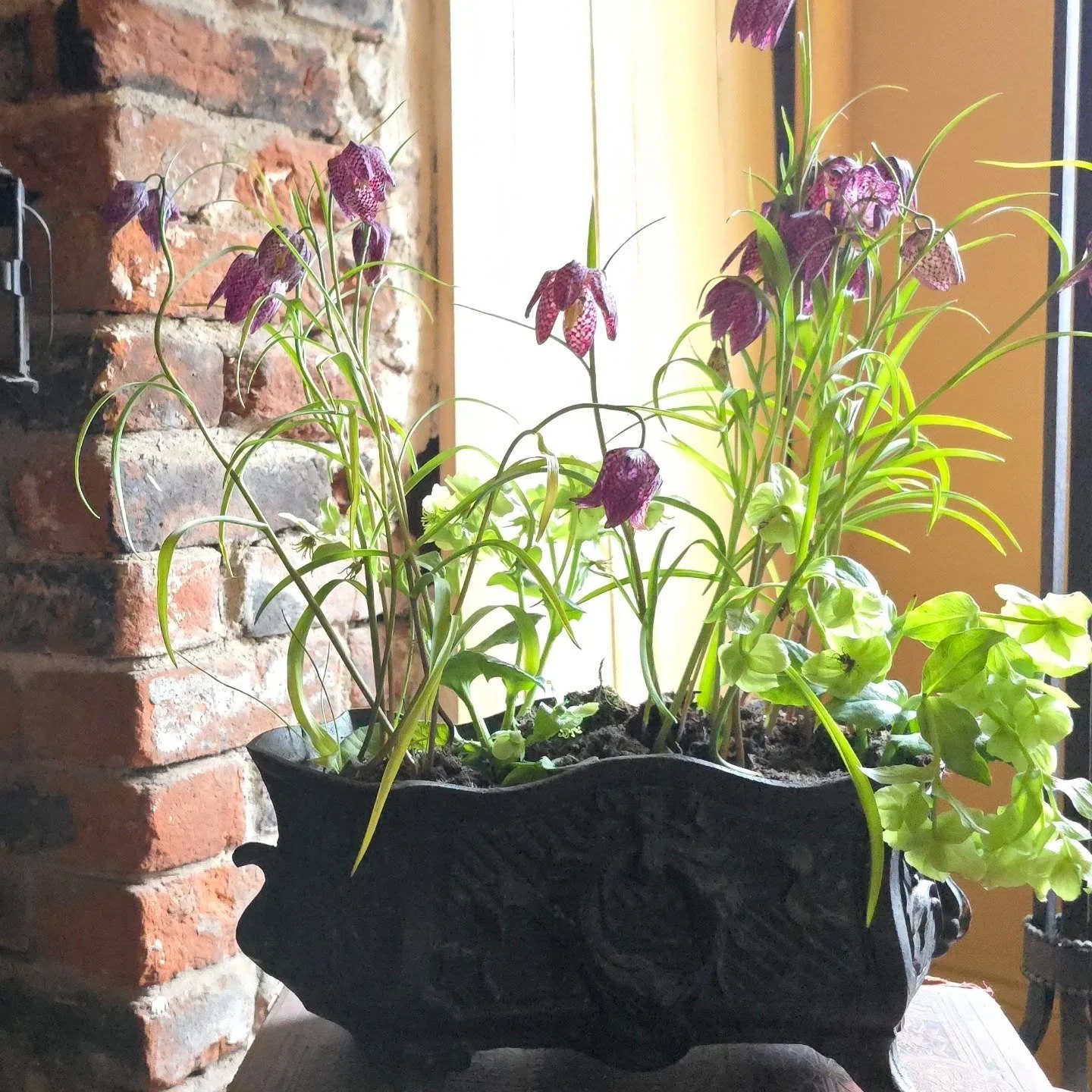
A substantial and deeply characterful French cast iron jardinière of rectangular form with serpentine edges, standing on four ornate scroll feet. Heavy, grounded, and entirely at ease among old wood and worn surfaces — this is a piece that brings the garden inside without effort or artifice.
Planted with seasonal flowers, it becomes something else entirely. Fritillaria, hellebore, narcissus — anything that nods and moves finds a natural home here. Empty, it holds its own just as well.
Provenance & History
French, 19th century. Cast iron jardinieres of this quality were produced across France during the latter half of the 1800s, intended for the interiors and conservatories of confident domestic spaces. The wreath and ribbon motif — deeply cast against a crosshatch ground with scrolled borders — reflects the decorative vocabulary of the period: purposeful, considered, and built to last.
Design Notes
Rectangular form with serpentine profile and shaped rim
Four ornate scroll feet elevating the piece from the surface
Deeply cast front and side panels featuring a central wreath and ribbon motif
Crosshatch ground with scrolled border detail
Four paw feet with scroll support
Surface carries the authentic patina of age — iron darkened and settled over time
Condition
Good antique condition consistent with age and use. Surface patina throughout — darkened and honest. No structural damage. A piece that has earned its character.
Dimensions
Width 36cm × Depth 16.5cm × Height 16cm
Styling Inspiration
Against limeplaster or bare brick, on an old oak surface, planted or empty. Works as naturally indoors as out — on a threshold, a windowsill, a mantelpiece, or a stone step. Equally at home in a considered country interior as on a garden table in early spring.
A grounded and expressive piece — collected with purpose, and ready to live with again.
Shipping & Delivery
UK shipping is calculated per item and area and is accurate for single item purchases. If you are buying multiple pieces and the combined shipping appears unusual, please get in touch and we will happily review.